The career path most engineering graduates never get shown.
Structural diagnostics is a specialised, high-demand field — one you can grow into a job, a consultancy or a practice of your own.
Start your career track
- 2Weekend sessions
- 5Live site visits
- 35Seats per batch
- 9Diagnostic tools
Two paths leave your degree. Only one keeps climbing.
Most graduates take the first path by default — not because they chose it, but because no one showed them the second.
The familiar route
Same degree, same openings, same interview pool as everyone in your batch. Growth still happens — slowly, inside one employer’s ladder.
The Structural Intelligence Track
A specialisation almost no one else graduates with. Growth you can carry into a job, a consultancy, or a practice you build yourself.
-
A specialist role
Join a diagnostics, waterproofing or facility-management team as the person who finds the cause.
-
Independent consulting
Advise housing societies and building owners before they spend on repairs.
-
Your own practice
Build an inspection practice of your own, at your own pace.
Why existing buildings need better maintenance.
Buildings deteriorate over time — that part is unavoidable. What is avoidable is how late it gets noticed. Most maintenance starts only after visible damage appears, by which point the real cause has often been at work for months.
Diagnosing the actual cause first, before any repair decision, leads to maintenance that holds instead of repairs that need repeating.
This is the standard FoxScan exists to make normal — evidence-based maintenance for existing buildings. Right now, very few people are trained to deliver it.
Advantages that compound over a career, not just an interview.
- Diagnose real building problems with a confidence most graduates never build.
- Speak the language of evidence — with employers, clients or your own customers.
- Specialise in a niche where you aren’t competing with every other graduate.
- Get in early on a career track that is still wide open.
Is the alternate path right for you?
- You’re about to graduate and don’t want the same career as everyone else in your batch.
- You want a skill you can build on — in a job, as a consultant, or on your own.
- You’re curious what a career in building diagnostics actually looks like.
- You want to enter the industry ahead of a curve most people haven’t noticed yet.
The technology behind this career, not just this course.
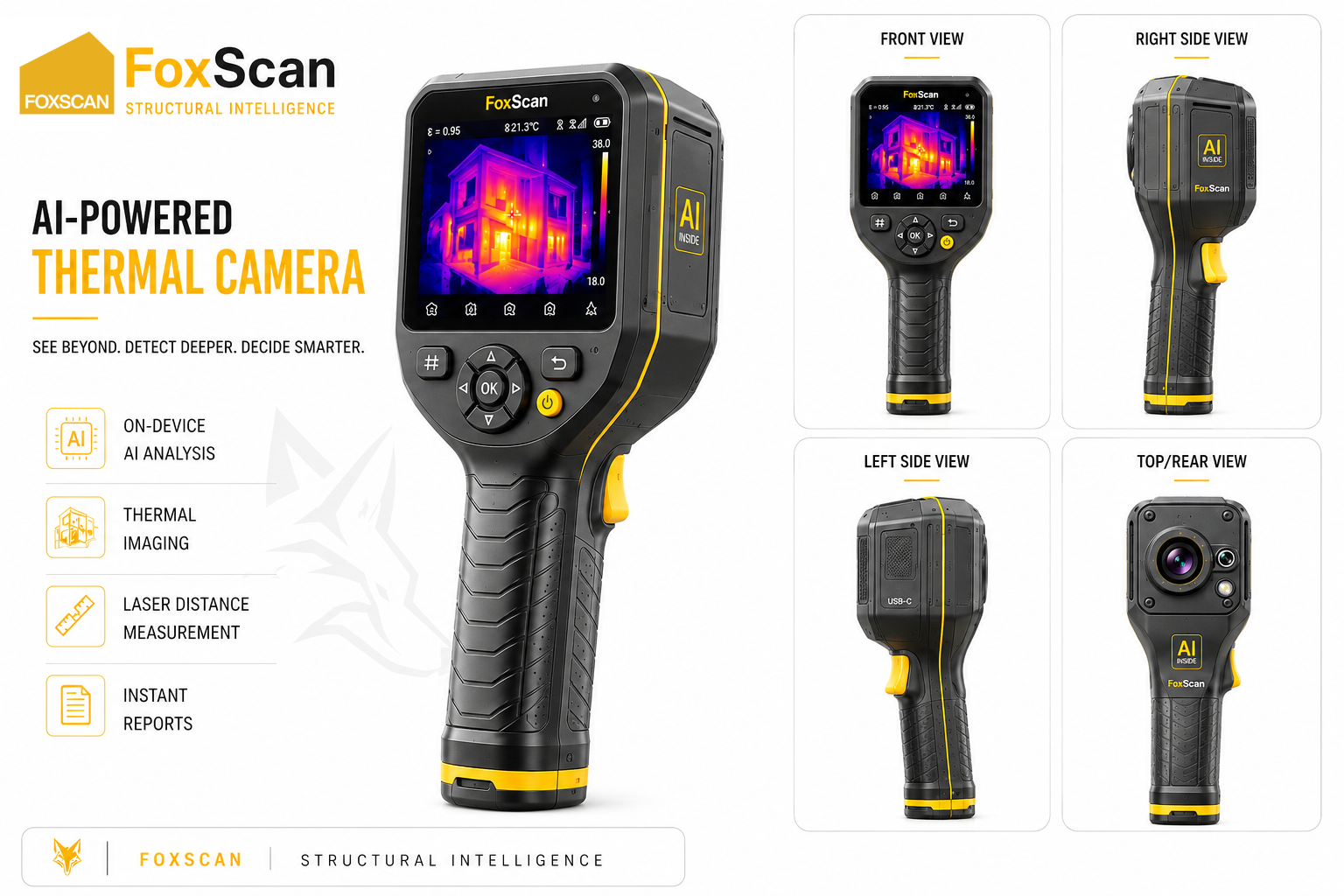
AI Thermal Camera
Sees temperature differences the eye can’t — seepage, insulation gaps and heat loss — mapped in real time and logged into a report.
On-device AI, thermal imaging, laser distance, instant reports
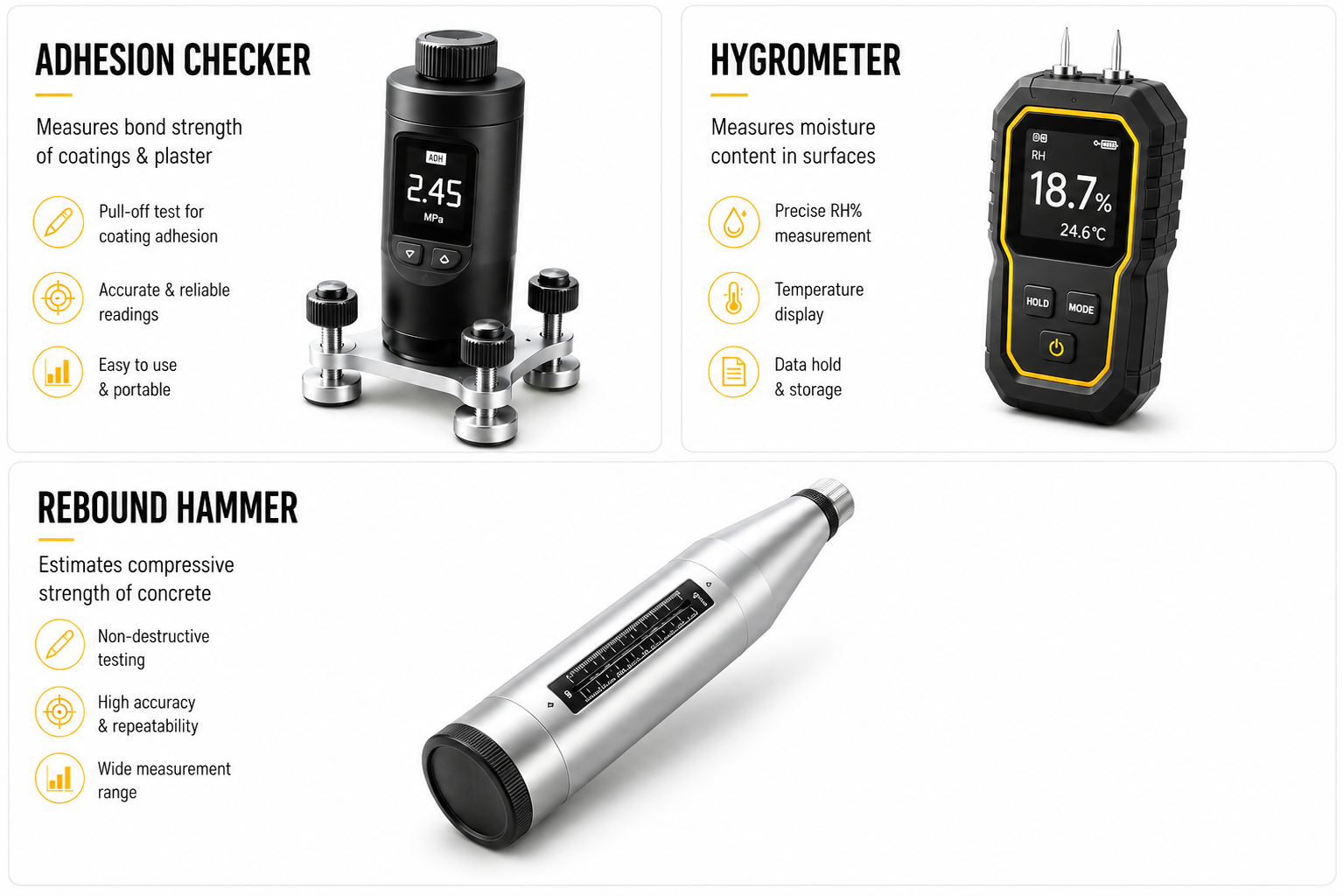
Diagnostic Instruments
Handheld tools that turn a visual guess into a number — bond strength, moisture content and concrete strength, all on site.
Adhesion checker, hygrometer, rebound hammer, acoustic leak detection
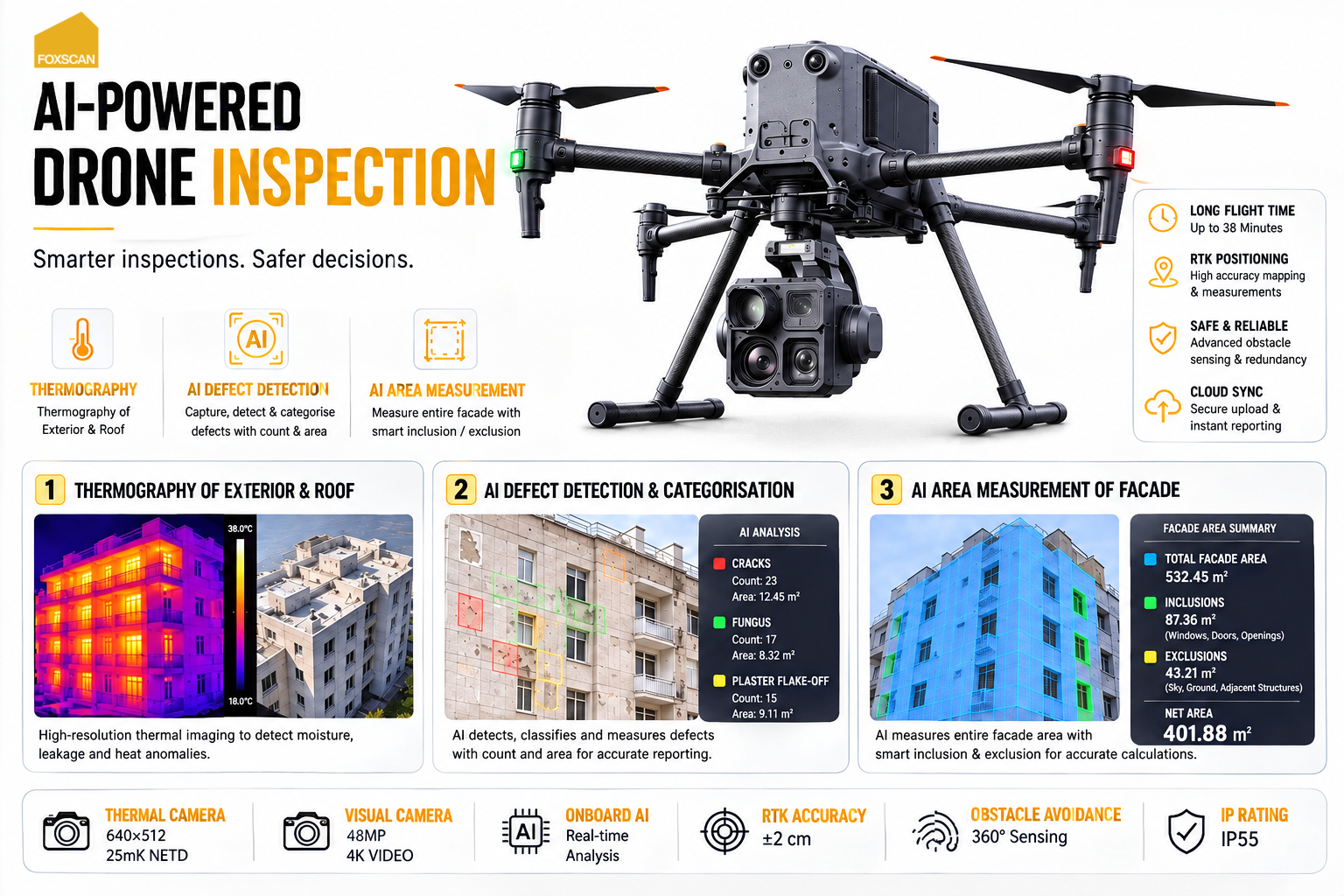
AI Drone Inspection
Covers an entire facade in one flight — thermography, defect detection and area measurement — without scaffolding.
AI defect detection, facade area measurement, RTK-accurate mapping
What’s included.
- 20 hours of theory and 5 site visits across 5 weekend sessions.
- Hands-on time with the thermal camera, moisture meter and drone.
- A certificate of participation — and the foundation to take it as far as you choose.
2-day weekend batch, Saturday and Sunday.
- Batches
- 2 per month
- Days
- Saturday & Sunday
- Seats
- 35 per batch
What graduates say.
I stopped chasing the same openings as everyone else. Having an actual specialisation changed which conversations I got invited to.
B.E. Civil, 2025 batch
The site visits made the difference. Using a thermal camera on a real building taught me more about where this field is headed than four years of lectures.
B.Tech Civil, final year
Frequently asked.
Who is this programme for?
Final-year or recently graduated civil engineering students exploring building diagnostics as a specialisation — alongside a regular job or as an independent path.
Is this instead of a civil engineering job, or in addition to one?
Both are common. Some participants use it to stand out in placements; others use it to start building an independent practice over time.
What will I actually learn?
How to identify dampness, cracks and paint or plaster failure using the same instruments professionals use on site.
Do I need any prior experience?
No. This is an entry-level introduction.
Should I choose offline or online?
Both are available. Offline includes the live site visits.
What happens after the programme?
You get a certificate of participation and a clear sense of whether to take this further — as a specialisation inside a regular job, or as an independent path.
Take the first step off the familiar path.
Share your details. Our team will confirm batch dates, venue and payment options on WhatsApp within a few hours.
- 1Submit this form
- 2We confirm your batch on WhatsApp
- 3Attend your weekend batch
Start your application
Application received.
We’ll confirm your batch date, venue and payment options on WhatsApp within a few hours.
OFFLINE BATCH — ₹4,000
Quick details before payment
Takes 10 seconds. Then you go straight to secure payment.
From ₹2,500Weekend batch
Start your track